

What is the sound - resistance of wholesale drying racks (if applicable)?
Sound resistance, also known as sound insulation or noise reduction, is a crucial factor in various products, especially those used in residential and commercial settings. When it comes to wholesale drying racks, the concept of sound resistance might not be the first thing that comes to mind. However, for many consumers, a quiet - operating drying rack can significantly enhance the overall user experience. As a supplier of Wholesale Of Drying Racks, understanding the sound - resistance properties of our products is essential to meet the diverse needs of our customers.
The Importance of Sound Resistance in Drying Racks
In modern living spaces, noise pollution can be a major concern. Whether it's the hum of an appliance, the rattling of a rack, or the mechanical sounds of a drying mechanism, excessive noise can disrupt the peace and quiet of a home or workplace. A drying rack with good sound - resistance can operate silently or with minimal noise, allowing users to go about their daily activities without being disturbed.
For households, a quiet - running drying rack is particularly valuable. It can be used in bedrooms, living rooms, or laundry areas without causing annoyance to family members. In commercial settings such as hotels or laundromats, a sound - resistant drying rack can create a more pleasant environment for guests and customers. Moreover, in noise - sensitive areas like hospitals or libraries, a silent drying rack can be an ideal solution for drying clothes or linens.
Factors Affecting the Sound Resistance of Drying Racks
Material Selection
The materials used in the construction of a drying rack play a significant role in its sound - resistance. High - quality, dense materials tend to absorb and dampen sound better than lightweight or hollow materials. For example, a drying rack made of solid wood or thick metal may have better sound - insulating properties compared to one made of thin plastic or flimsy metal.
Wood is a natural sound absorber. It has a porous structure that can trap sound waves and reduce their transmission. Metal, on the other hand, can be engineered to have good sound - damping characteristics. Some metals, when treated or combined with other materials, can effectively reduce vibrations and noise. As a wholesale supplier, we carefully select materials for our drying racks to ensure optimal sound resistance.
Design and Construction
The design and construction of a drying rack also impact its sound - resistance. A well - designed rack with a stable structure is less likely to produce rattling or vibrating noises. For instance, a drying rack with a sturdy frame and secure joints will be more stable and quieter during operation.
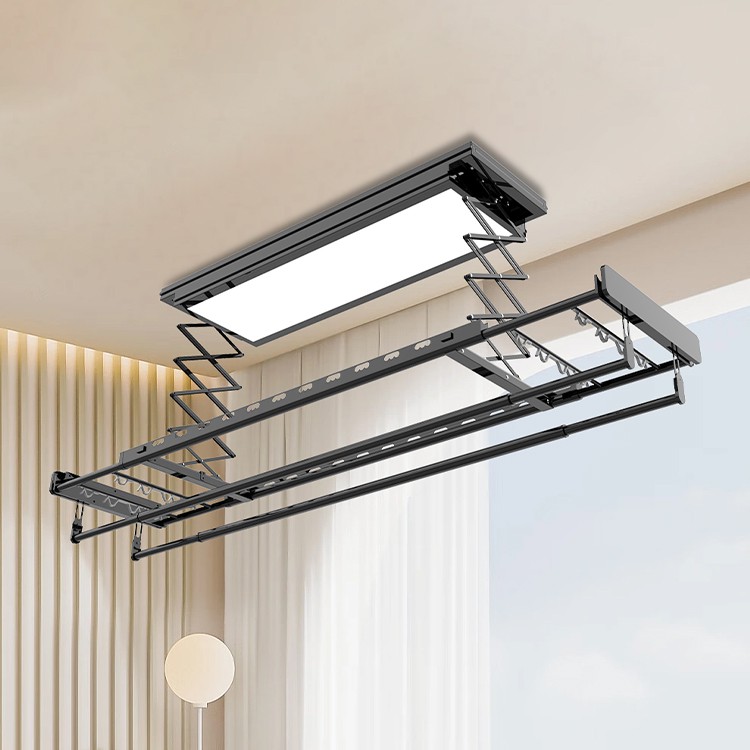
In addition, the internal components of an electric drying rack, such as the motor and fan, can generate noise. A well - engineered motor with proper insulation and vibration - dampening features can significantly reduce the noise level. Our Remote Control Clothes Drying Machine is designed with advanced technology to minimize noise, providing a quiet and efficient drying experience.
Installation and Placement
Proper installation and placement of a drying rack can also affect its sound - resistance. If a drying rack is not installed correctly, it may vibrate against the wall or floor, creating additional noise. Ensuring that the rack is level and securely fixed can help reduce such vibrations.
The placement of the drying rack can also make a difference. Placing it on a soft surface or using anti - vibration pads can further dampen noise. For example, placing a drying rack on a carpeted floor or using rubber pads under its feet can reduce the transfer of vibrations and noise to the surrounding environment.
Measuring the Sound Resistance of Drying Racks
To accurately assess the sound resistance of drying racks, several methods can be used. One common approach is to measure the sound pressure level (SPL) in decibels (dB). A lower SPL indicates less noise. Specialized sound - measuring equipment can be used to measure the noise level of a drying rack during operation.

In a laboratory setting, the drying rack can be tested under controlled conditions. The sound level can be measured at different distances from the rack and at various operating speeds. This data can then be used to determine the sound - resistance performance of the rack. As a supplier, we conduct regular sound - testing on our products to ensure that they meet the highest standards of sound resistance.
Our Sound - Resistant Drying Rack Products
We offer a wide range of Household Drying Rack products with excellent sound - resistance properties. Our electric drying racks are designed with advanced noise - reduction technology. The motors are carefully selected and insulated to minimize noise, and the frames are constructed to be stable and vibration - free.
Our manual drying racks are also engineered for quiet operation. The materials used in their construction are chosen for their sound - absorbing qualities, and the design ensures a stable and silent performance. Whether you are looking for a small, compact drying rack for your home or a large - scale drying solution for a commercial establishment, we have the right product to meet your needs.
Conclusion
Sound resistance is an important consideration when it comes to drying racks. As a wholesale supplier, we are committed to providing high - quality drying racks with excellent sound - resistance properties. Our products are designed and constructed to minimize noise, providing a quiet and comfortable drying experience for our customers.
If you are interested in our sound - resistant drying rack products, we invite you to contact us for procurement and negotiation. We are always ready to discuss your specific requirements and provide you with the best solutions at competitive prices.
References
- "Acoustics: Sound and Vibration", by Cyril M. Harris.
- "Materials for Noise and Vibration Control", by Leo L. Beranek.