

Can I control an embedded clothes dryer with my smartphone?
In today's era of rapid technological advancement, the integration of smart technology into household appliances has become a trend. As a leading supplier of embedded clothes dryers, I often receive inquiries from customers about the possibility of controlling our products with smartphones. In this blog post, I will delve into this topic and explore the feasibility, benefits, and challenges of smartphone control for embedded clothes dryers.
The Feasibility of Smartphone Control
The concept of controlling an embedded clothes dryer with a smartphone is not only feasible but also increasingly common in the market. With the development of Internet of Things (IoT) technology, many household appliances are now equipped with Wi-Fi or Bluetooth connectivity, allowing them to be connected to smartphones. Our embedded clothes dryers are no exception. By integrating a smart control module into the dryer, users can easily connect their devices to the dryer through a dedicated mobile app.
The smart control module in our dryers is designed to communicate with the smartphone app via a secure wireless network. Once connected, users can access a range of functions and features directly from their smartphones. For example, they can start or stop the drying cycle, adjust the drying time and temperature, select different drying programs, and receive real-time notifications about the dryer's status. This level of control provides users with greater convenience and flexibility, allowing them to manage their laundry tasks more efficiently.
Benefits of Smartphone Control
The ability to control an embedded clothes dryer with a smartphone offers several significant benefits for users. Firstly, it enhances convenience. Instead of having to be physically present near the dryer to operate it, users can control the dryer from anywhere using their smartphones. This is particularly useful for busy individuals who may not have the time to monitor the drying process constantly. For example, they can start the dryer on their way home from work, ensuring that their clothes are dry and ready to be taken out when they arrive.
Secondly, smartphone control provides greater flexibility. Users can customize the drying settings according to their specific needs and preferences. They can choose from a variety of drying programs, such as delicate, normal, and heavy-duty, and adjust the drying time and temperature to suit different types of fabrics. This not only helps to protect the clothes from damage but also ensures that they are dried effectively.
In addition, smartphone control allows for better energy management. Users can monitor the energy consumption of the dryer in real-time and adjust the settings to optimize energy efficiency. For example, they can choose a lower temperature setting or a shorter drying time if the clothes are not very wet. This can help to reduce energy costs and contribute to a more sustainable lifestyle.
Challenges and Considerations
While smartphone control for embedded clothes dryers offers many benefits, there are also some challenges and considerations that need to be addressed. One of the main challenges is ensuring the security and privacy of user data. Since the dryer is connected to the internet, there is a risk of data breaches and unauthorized access. To address this issue, we take several measures to protect user data. Our smart control module uses advanced encryption technology to secure the communication between the dryer and the smartphone app. We also implement strict security protocols to prevent unauthorized access to the dryer's system.
Another challenge is the compatibility of the smartphone app with different devices and operating systems. To ensure a seamless user experience, our app is designed to be compatible with a wide range of smartphones and tablets running on popular operating systems such as iOS and Android. We also regularly update the app to improve its performance and compatibility with new devices.
In addition, some users may be hesitant to adopt smartphone control technology due to concerns about complexity and reliability. To address these concerns, we provide comprehensive user manuals and online support to help users set up and use the smartphone app. We also conduct thorough testing and quality control to ensure the reliability and stability of the smart control system.
Related Products
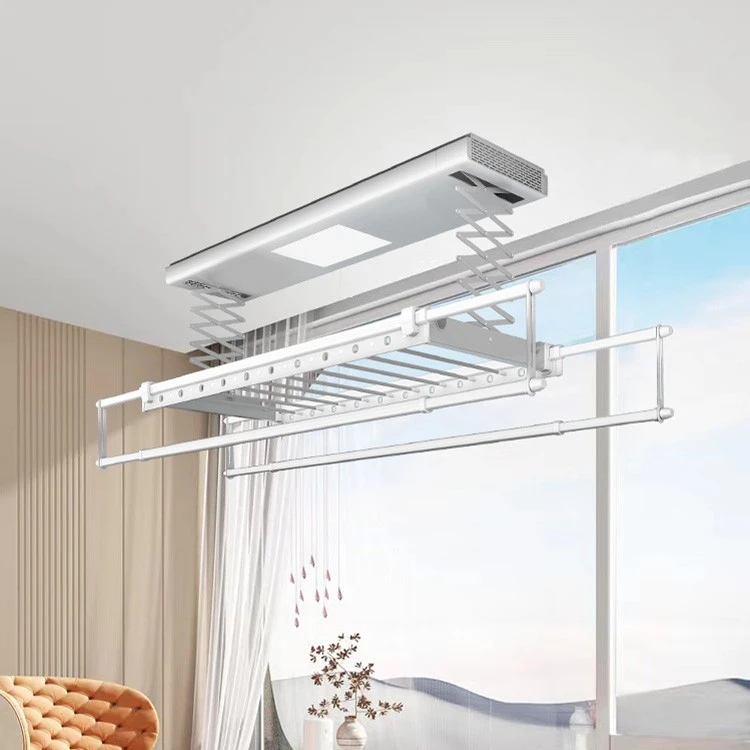
In addition to our embedded clothes dryers, we also offer a range of related products that complement the smart home experience. For example, our Voice Drying Rack is a smart drying solution that can be controlled using voice commands. It is equipped with advanced sensors and intelligent algorithms to ensure efficient and effective drying. Our Wholesale Of Drying Racks is a cost-effective option for businesses and organizations that need to dry a large volume of clothes. It is available in various sizes and configurations to meet different needs. And our Ultra-thin Clothes Dryer is a space-saving solution that is perfect for small apartments and laundry rooms. It is designed to be sleek and stylish, while still providing powerful drying performance.
Conclusion
In conclusion, the ability to control an embedded clothes dryer with a smartphone is a feasible and beneficial technology that offers greater convenience, flexibility, and energy efficiency for users. As a leading supplier of embedded clothes dryers, we are committed to providing our customers with innovative and high-quality products that meet their needs and expectations. Our smart control system is designed to be user-friendly, secure, and reliable, ensuring a seamless and enjoyable user experience.

If you are interested in learning more about our embedded clothes dryers or other related products, please feel free to contact us for procurement and negotiation. We look forward to working with you to meet your laundry needs.
References
- Internet of Things (IoT) for Smart Homes: A Comprehensive Review. Journal of Smart Home Technology, 2020.
- The Future of Home Appliance Control: Smartphone Integration. International Journal of Consumer Electronics, 2019.
- Energy Efficiency in Smart Home Appliances: Challenges and Opportunities. Energy Policy, 2018.